
Rethinking the Foundation of Child Online Safety
What if we’ve been trying to solve the wrong problem? In her latest op-ed, Dr. Lisa Strohman explores why protecting children online requires more than age verification and regulation.
LDr. Lisa Strohman
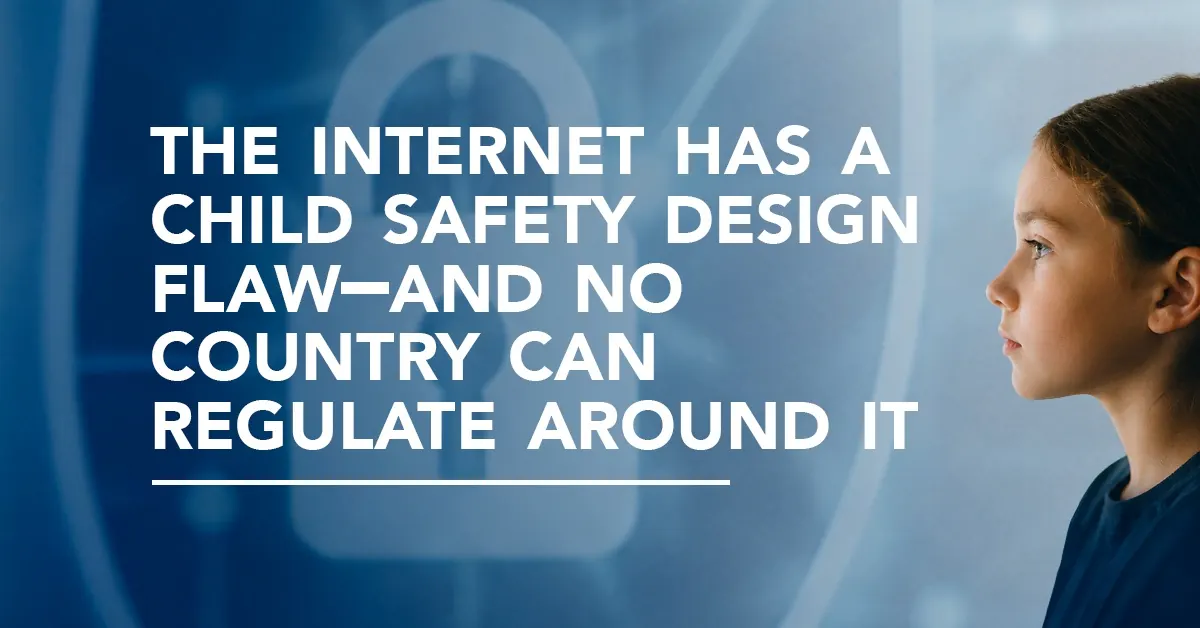
For years, efforts to protect children online have centered on age verification, parental controls, content moderation, and platform policies. While each of these plays an important role, they address individual pieces of a much larger challenge.
In her latest op-ed, Dr. Lisa Strohman argues that the internet itself was never designed with children in mind. As countries around the world introduce new legislation and regulations aimed at protecting young users, she suggests that lasting progress will require looking beyond individual laws and toward the underlying infrastructure that supports digital interactions.
Rather than relying solely on surveillance-based approaches or country-by-country regulation, Dr. Strohman makes the case for a global, privacy-preserving trust framework that helps verify parental authority, protect children’s identities, and enable safer digital experiences by design.
Her perspective encourages readers to think beyond today’s headlines and consider a broader question: What would an internet built to protect children from the very beginning actually look like?
As technology continues to evolve, conversations like these are helping shape the future of digital trust, privacy, and child protection.
Read Dr. Lisa Strohman’s full op-ed to explore why the future of child online safety may depend on rethinking the internet’s foundation itself.